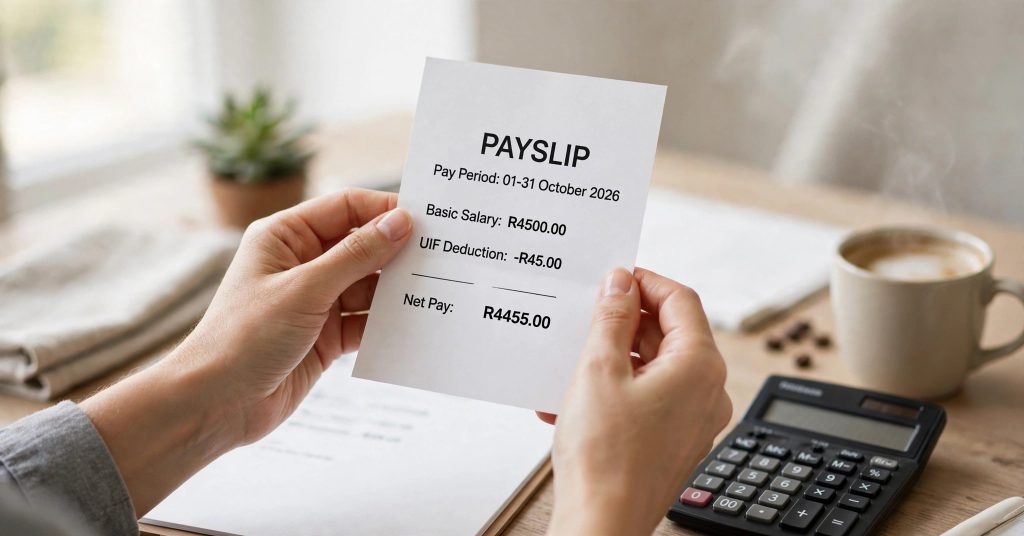
How to Read a Payslip in South Africa: Understand Your Salary and Deductions
Getting your payslip is an important part of working. But many employees look at the document, see several amounts and deductions, and still do not know exactly what everything means.
A payslip shows how your employer calculated your pay. It can tell you your basic salary, overtime, allowances, deductions and the amount you should receive in your bank account.
Understanding your payslip can also help you notice mistakes early. If your salary changes, a deduction appears that you do not understand, or your working hours look incorrect, your payslip gives you useful information to check.
What Is a Payslip?
A payslip is a document that shows how an employer calculated an employee’s pay for a specific pay period.
Your payslip can contain several sections. The exact layout may differ from one employer to another, but the main information usually covers your earnings and deductions.
A payslip may include:
- Employee information
- Employer information
- Pay period
- Basic salary
- Overtime
- Allowances
- Bonuses or other earnings
- PAYE
- UIF
- Retirement fund deductions
- Other authorised deductions
- Net salary
You should keep your payslips in a safe place because they can help you track your income and deductions over time.
How to Read the Earnings Section
The first part to understand is the money you earned before deductions.
Basic Salary
Your basic salary is the main amount your employer pays you for your normal work.
Some employees receive a fixed monthly salary. Others may earn based on hours worked or another agreed arrangement.
Your employment contract should help you understand how your basic pay works.
Overtime
If you work approved overtime, your payslip may show a separate overtime amount.
Check the overtime hours and amount against your own records. If you regularly work overtime but cannot see it on your payslip, ask your employer or payroll department to explain the difference.
Allowances
An employer may provide certain allowances depending on the job and employment arrangement.
For example, a payslip could show an allowance for travel, housing or another work-related benefit.
Do not assume that every allowance works in the same way for tax purposes. The treatment can depend on the type of allowance and the applicable rules.
Bonus or Other Payments
A payslip may also show bonuses, commissions, incentives or other payments.
These amounts can make your earnings higher during one pay period than another.
This is one reason why you should compare your payslip with previous payslips instead of assuming that every month will look exactly the same.
What Does Gross Salary Mean?
Gross pay is the amount you earn before deductions are taken from your pay.
For example, your earnings may include your basic salary plus overtime and certain other payments.
Your gross amount is not necessarily the amount that will reach your bank account.
This is because your employer may need to deduct amounts such as PAYE, UIF and other authorised deductions.
What Is PAYE?
PAYE stands for Pay As You Earn.
It refers to tax that an employer deducts from an employee’s remuneration and pays to the South African Revenue Service.
The amount shown on your payslip can change depending on your earnings and your individual circumstances.
If PAYE appears on your payslip, it is important to understand that this deduction reduces the amount you receive after deductions.
What Is UIF on a Payslip?
UIF stands for Unemployment Insurance Fund.
Employees who contribute to UIF may qualify for certain benefits when they meet the relevant requirements.
A UIF deduction may therefore appear on your payslip.
If you see UIF on your payslip and do not understand the amount, ask your employer’s payroll department to explain how it was calculated.
What Are Other Deductions?
Not every deduction on a payslip is a tax deduction.
Depending on your employment arrangement, your payslip may show other deductions.
These could include:
- Retirement fund contributions
- Medical aid contributions
- Approved insurance deductions
- Salary advances
- Certain employee benefits
- Other authorised deductions
You should understand every deduction that reduces your pay.
If you see a deduction that you do not recognise, do not simply ignore it. Ask your employer for an explanation.
What Is Net Salary or Take-Home Pay?
Net pay is the amount left after the applicable deductions have been taken from your earnings.
This is usually the amount that you expect to receive in your bank account.
That means:
Gross pay − applicable deductions = net pay
Your net pay can change when your earnings or deductions change.
For example, working overtime can increase your earnings, while a new authorised deduction can reduce the amount you take home.
Why Is My Take-Home Pay Lower Than My Salary?
Many employees say, “My salary is higher than the amount I receive in my bank account.”
This can happen because the salary figure they have in mind may refer to gross pay rather than net pay.
Your payslip separates the money you earned from the deductions taken from that amount.
For this reason, always check the net pay when you want to know how much should reach your bank account.
Do not compare your gross salary directly with your bank payment.
What Should You Check on Your Payslip?
Take a few minutes to check your payslip each time you receive it.
1. Check Your Personal Details
Make sure your name and employee information are correct.
2. Check the Pay Period
Confirm that the payslip covers the correct period.
3. Check Your Basic Pay
Compare the basic salary with your employment agreement and previous payslips.
4. Check Overtime
If you worked approved overtime, check that the hours and payment appear correctly.
5. Check Allowances
Make sure expected allowances appear correctly.
6. Check Deductions
Look through every deduction. You should know what each one represents.
7. Check Net Pay
Finally, check the amount you should receive after deductions.
This simple routine can help you identify problems before they continue for several pay periods.
Common Payslip Problems to Watch For
A payslip does not automatically guarantee that every amount is correct.
Employees should pay attention when:
- The basic salary suddenly changes
- Overtime is missing
- Expected allowances disappear
- A new deduction appears
- A deduction seems unusually high
- The pay period is incorrect
- The net pay does not match the expected amount
- Personal information is incorrect
If something looks wrong, keep the payslip and supporting information. Your employment contract, timesheets and previous payslips can help you explain the problem.
What Should You Do If Your Payslip Looks Wrong?
Start by asking your employer or payroll department for an explanation.
Be specific about the problem. Instead of simply saying, “My salary is wrong,” explain which amount appears incorrect.
For example, you could ask why your overtime is missing or why a new deduction appears.
Keep copies of relevant documents and messages.
If the problem involves a workplace dispute and you cannot resolve it directly with your employer, you may need to seek appropriate employment advice or assistance from the relevant South African labour authorities.
Why You Should Keep Your Payslips
Payslips can become useful long after payday.
You may need them when checking your income, applying for certain financial services, comparing salary changes or investigating a payroll problem.
Keeping your payslips also gives you a record of how your earnings changed over time.
A simple folder containing your payslips can make it easier to find information when you need it.
Payslip vs Bank Statement: What Is the Difference?
Your payslip and bank statement provide different information.
A payslip explains how your employer calculated your pay.
A bank statement shows money that actually entered or left your bank account.
If the amount deposited into your account differs from the net pay shown on your payslip, check the dates and transaction details first. If the difference remains unexplained, contact your employer’s payroll department.
Frequently Asked Questions About Payslips
What is the most important amount on a payslip?
The most important amount depends on what you are checking. If you want to know what you should receive in your bank account, look at the net pay. If you want to understand your total earnings before deductions, look at the gross pay.
Is gross salary the same as take-home pay?
No. Gross salary refers to earnings before applicable deductions. Take-home pay, also called net pay, is the amount left after deductions.
Why should I check my payslip every month?
Checking your payslip helps you understand your earnings and identify possible errors in salary, overtime, allowances or deductions.
What should I do if I do not understand a deduction?
Ask your employer or payroll department to explain the deduction. Do not assume that an unfamiliar deduction is correct simply because it appears on your payslip.
Final Thoughts
Learning how to read a payslip can make it much easier to understand your income.
The key is to look at your payslip in sections. Start with your earnings, check your gross pay, review each deduction and then confirm your net pay.
You do not need to understand every payroll term immediately. Once you become familiar with basic salary, overtime, allowances, PAYE, UIF, deductions and net pay, your payslip becomes much easier to understand.
If something does not look right, ask questions and keep your records. Understanding your payslip is an important part of understanding your working life and your money.