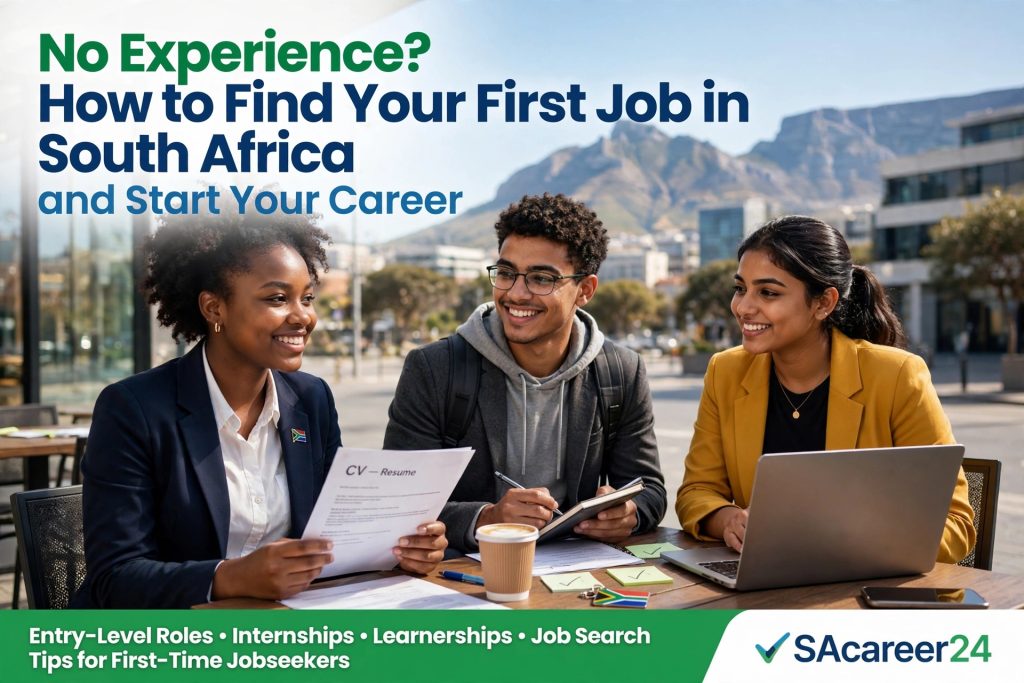
No Experience? How South Africans Can Find Their First Job and Build Work Experience
For many South Africans, getting a first job can feel like a difficult cycle: employers want experience, but a person needs an opportunity before they can gain that experience.
This is a real labour-market challenge. Statistics South Africa reported an official unemployment rate of 33.6% in the second quarter of 2026, with about 8.5 million people unemployed. Youth unemployment remains especially high.
For someone starting out, the answer is not to apply for every vacancy. A better approach is to understand which opportunities are realistic, prepare a useful CV and search in several places.
What Counts as an Entry-Level Job?
An entry-level job is generally a position aimed at someone starting a career or entering a particular type of work.
The exact requirements differ between employers.
Some vacancies may ask for matric. Others may accept lower school grades. Some may require a certificate, licence or specific skill.
Examples of areas where first-time job seekers can look include:
- Retail
- Cleaning
- Hospitality
- Warehousing
- Customer service
- Administration
- Manufacturing
- General work
- Call centres
- Sales support
A job advertised as entry-level does not automatically mean that everyone will qualify. Read the requirements carefully before applying.
You Can Search Without Having a Long Work History
One of the biggest mistakes first-time job seekers make is searching only for jobs with the words “no experience”.
That can make the search too narrow.
Instead, search by the type of work you can do.
For example, someone interested in retail can search for retail assistant, shop assistant or cashier vacancies.
Someone interested in office work can search for administration assistant, receptionist or data capturing positions.
This approach gives you more opportunities to investigate.
Your CV Can Still Work Without Experience
A CV does not need to contain years of employment.
If you have never had a formal job, start with the information you do have.
Include your:
- Contact details
- Education
- Relevant skills
- Computer knowledge
- Languages you can communicate in
- Volunteer activities
- School or community projects
- Short courses or training
- References, where appropriate
Do not create fake employment history.
Instead, explain what you can actually do.
For example, if you have basic computer skills, say so. If you have helped organise a community activity, you can mention the responsibility you had if it is relevant to the job.
Look Beyond Traditional Job Websites
South African job seekers have several ways to look for opportunities.
The Department of Employment and Labour operates Employment Services of South Africa (ESSA). Work seekers can register and search for opportunities through the system. The department says its public employment services also provide work-seeker registration, job matching and employment-related support.
The Department also provides an online employment-services platform where work seekers can register, search for jobs and access employment counselling services.
This gives first-time job seekers another option instead of relying only on social media posts.
Work Experience Can Come Through More Than One Route
Your first experience does not necessarily have to come from a permanent job.
Look at opportunities such as internships, learnerships, workplace programmes and other structured training opportunities where you meet the requirements.
The South African government has also identified lack of work experience as a barrier for young people entering the labour market. Its Youth Employment Service provides workplace experience opportunities through partnerships with private-sector employers.
The government’s 2026 information on youth employment also points young people towards platforms such as SAYouth, ESSA and NYDA for access to work, learning and development opportunities.
Location Matters When Searching for Work
A useful job-search strategy is to include your location.
Instead of searching only for “jobs South Africa”, try searches such as:
Jobs in Johannesburg with no experience
Entry-level jobs in Pretoria
Retail jobs in Durban
General worker jobs in Cape Town
No experience jobs in Gauteng
This can help you find vacancies that are easier to reach.
Travel costs can also be an important part of the decision. A job that is far away may not be practical if the daily transport cost takes a large part of your income.
Do Not Ignore Small Employers
Large companies often receive many applications.
Smaller businesses can also provide useful starting points.
Depending on the area, look at local shops, restaurants, guest houses, warehouses, workshops, offices and other businesses.
Check whether they have an official vacancy before handing over your CV.
If you visit a business in person, be polite and ask whether they are accepting applications. Do not assume that every business is hiring simply because you have delivered a CV.
Prepare for Your First Interview
If an employer calls you for an interview, preparation matters.
Read the vacancy again before attending.
Think about three things:
What can I do?
Why do I want this job?
Why should the employer consider me?
If you have no employment history, do not pretend otherwise.
Explain that you are looking for an opportunity to begin working and that you are prepared to learn.
Give real examples of responsibility from school, volunteering, temporary activities or other parts of your life when they are relevant.
Be Careful With “No Experience” Job Scams
Job seekers can be vulnerable to fake recruitment offers.
Be cautious if someone promises guaranteed employment after you make a payment.
Also avoid sharing banking PINs, passwords or security codes with someone claiming to be a recruiter.
Before applying, check the employer’s name and contact details. When possible, confirm the vacancy through an official company channel.
A genuine job search should not require you to surrender your banking security information.
Make Your Search a Weekly Routine
Looking for work once a month is unlikely to give you enough opportunities to learn what is available.
Create a simple routine.
Check new vacancies regularly. Save positions that match your skills. Update your CV when necessary. Record where you have applied.
You can also use unsuccessful applications as feedback.
If many vacancies require a skill you do not have, consider whether you can learn that skill through a recognised course, training programme or practical opportunity.
The First Job Is About More Than the Paycheque
For a first-time job seeker, employment can provide more than income.
It can introduce you to workplace routines, customer service, teamwork, communication and professional expectations.
That experience can later become part of your CV.
However, do not accept every offer simply because it is described as an opportunity. Check the employer, understand the duties and make sure the position is genuine.
Final Thoughts
Finding jobs in South Africa with no experience can take persistence, especially in a competitive labour market.
The strongest approach is to widen your search without lowering your standards. Look at entry-level positions, workplace programmes, learnerships and other legitimate opportunities that can help you develop experience.
Build an honest CV, search by job type and location, use official employment services and verify vacancies before sharing personal information.
For South African job opportunities and career information, visit SAcareer24 at www.sacareer24.co.za.
Sources and References
- Statistics South Africa, Quarterly Labour Force Survey, Q2 2026.
- Statistics South Africa, Youth and the Labour Market, Q1 2026.
- South African Department of Employment and Labour, Public Employment Services and ESSA.
- South African Government, youth employment and workplace-experience information.
Publishing note: This article was written as original editorial content for SAcareer24. Statistics and government programme information are attributed to the relevant official sources. Job requirements can change, so readers should verify individual vacancies with the employer before applying.